Your front door colour does more work than most homeowners realise. It sets the character of the whole property, signals your taste before a visitor has even knocked, and in some cases affects how quickly a home sells.
The best wooden front door colour balances your property’s architectural style, the surrounding brickwork or render, and the finish type whether painted or stained.
Before picking a colour, you need to decide whether you want a painted or stained surface finish. The two produce completely different results, and the right choice depends on how much of the natural wood character you want to keep.
A painted finish gives you full creative range. Our bespoke hardwood front doors are available in a wide opaque colour range, meaning you can go from classic black to deep racing green or soft heritage blue. The paint sits on the surface and fully covers the grain, producing a smooth, consistent look that suits both period and contemporary homes.
A stained or wood stain finish lets the grain show through. This works beautifully with doors made from Oak, Sapele and Idigbo – three of the premium timbers in our wood stain range. Oak gives a warm, golden-brown tone. Sapele runs slightly darker with a ribbon-like grain pattern. Idigbo is lighter and works well where you want a more understated natural look. If your home is a farmhouse, cottage or barn conversion, a stained oak entrance door can look genuinely special in a way paint cannot replicate.
Colour trends for external timber doors have shifted considerably over the past few years. Here is what is leading the way in 2026.
Black is currently the single most popular front door colour choice in the UK. It is bold without being aggressive, works on everything from new-build townhouses to Georgian terraces, and pairs well with brass, chrome or antique bronze ironmongery. A gloss black on a solid hardwood panel door is one of the most striking entrance combinations available. If you want to soften the effect slightly, a satin black reads as slightly less stark.
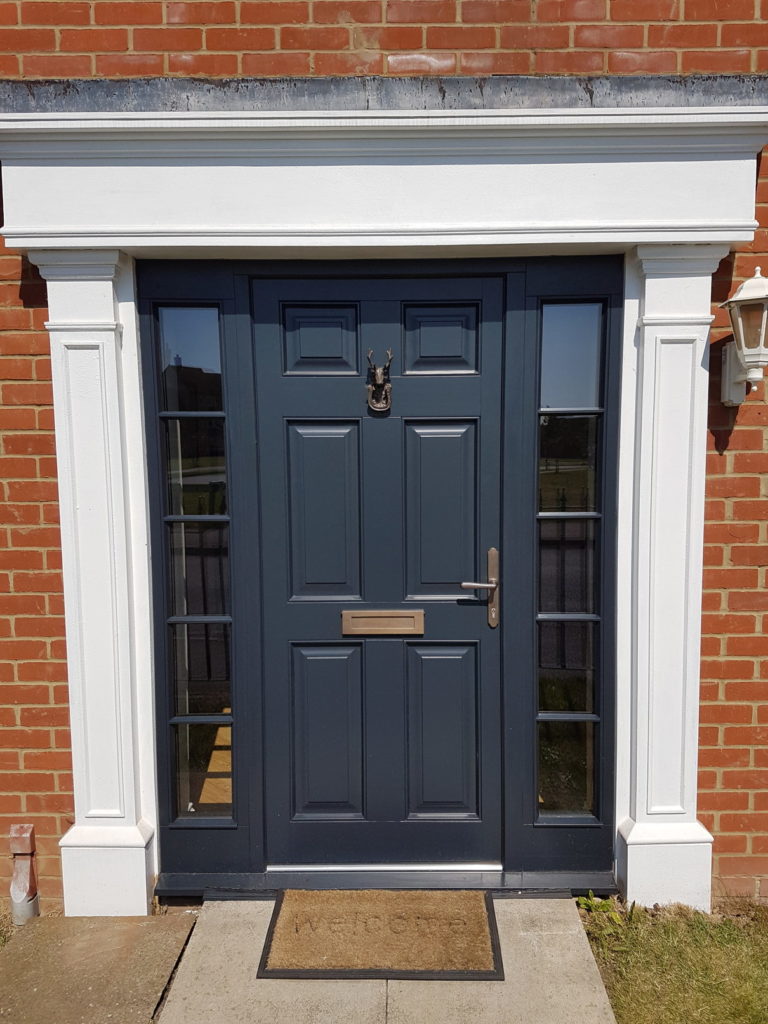
Grey in its various depths has dominated front door trends for several years, and the range is genuinely wide. Charcoal grey suits contemporary homes where a bold yet refined look is the goal. Slate sits in the mid-range and works on brick-built properties where you do not want the door to compete with the facade. Lighter greys with blue undertones are a more classic choice, reminiscent of 18th-century Scandinavian colour palettes, and sit very well on rendered or painted properties.
Earthy greens have moved from a niche choice to one of the most requested colours for timber entrance doors. Sage green is particularly strong on cottage-style properties because it is soft and calming, complements brickwork and stone facades, and pairs naturally with plants and garden elements at the entrance. Olive green reads as more urban and works on both traditional and contemporary homes. At the deeper end, a bottle green or forest green in full gloss creates a rich, sophisticated surface that really stands out, especially when paired with a white frame.
Deep blues with green undertones – often associated with heritage paint ranges – are another consistently popular choice, particularly for Victorian and Edwardian properties. This type of colour works well because it complements the red-brick or London stock brickwork typical of those homes, without clashing. A mid-toned blue-grey sits in softer territory and suits homeowners who want colour but with a quieter result.
Burgundy is a strong option for period homes where you want warmth without brightness. Its deep red undertones bring character and a heritage feel, and it pairs very well with gold hardware and wooden trims. Classic reds signal energy and welcome, and on the right property, particularly in a terrace of uniform brickwork, a red door reads as confident rather than loud.

If you are leaning toward a stained finish rather than paint, the timber species itself determines the base colour you are working with.
Oak is the most widely requested timber for external front doors. It is stable, dense, and takes a stain beautifully. The natural colour runs from pale gold to honey, depending on the grade. An untreated or lightly stained oak door will age to a distinguished silver-grey over time if left without maintenance – which some homeowners actively prefer, particularly in contemporary settings.
Sapele is a hardwood with a slightly richer, darker base tone and a distinctive interlocked grain that produces a ribbon figure in the surface. Stained, it reads as a warm mid-brown and gives a more formal, polished appearance.
Idigbo is lighter and more uniform than Sapele, offering a cleaner look for homeowners who want a natural wood finish without too much grain drama.
All three are available as part of our premium wood stain range on our front doors page.
At Windows & Doors UK, our front doors are made to measure in our own joinery using sustainably sourced hardwood. Every door is thermally efficient, fitted with multipoint locking for security, and weatherproofed against the elements including UV damage. You can specify any solid opaque colour, or choose from our premium wood stain range in Oak, Sapele or Idigbo.
Our ironmongery range runs from contemporary brushed steel through to traditional Victorian-style brass handles, letterboxes and knockers – all chosen to complement whichever colour direction you take.
Whether your property is a Victorian terrace, a rural cottage, a contemporary new-build or a barn conversion, we can supply a door styled, sized and finished exactly to your requirements. Get a free quote or call us on 0333 335 5416 to discuss your options.